
Let's be straight about something. Every parent thinks their kid is special. And you know what? They are. But that doesn't mean they'll automatically crack military school entrance exams.
I've seen too many families jump into this without understanding what they're signing up for. The disappointment when results come? It's heartbreaking.
Why This Isn't Like Regular School Tests
Your child might be scoring 95% in their regular school. That's great! But these military school exams? Completely different ball game.
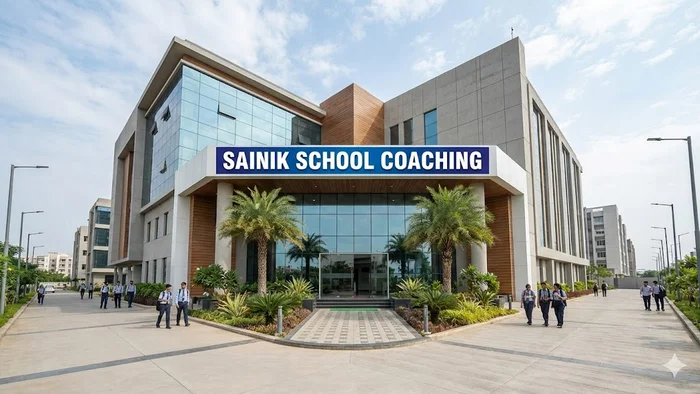
Rashtriya Military School and RIMC ↗ coaching prepare students for tests that thousands of brilliant kids take. Not just from your city. From everywhere. Delhi, Mumbai, small towns in UP, villages in Rajasthan – everyone's competing for the same limited seats.
The exams test Math, sure. But also reasoning, general knowledge, English comprehension. And here's what catches most parents off guard – there's a physical fitness component too. Your bookworm kid who hates sports? That's going to be a problem.
What Actually Makes Coaching Worth the Money
When you're looking for best Sainik coaching, don't just Google and pick the first result. That's lazy. And expensive if it doesn't work out.
Here's what you actually need:
Teachers who've been doing this for years. Not fresh graduates teaching part-time. People who know these exams inside out. Who've seen every trick question. Who can predict what's coming.
I once met a teacher who'd been coaching for 15 years. He could look at a student's mock test and tell exactly where they'd mess up in the real exam. That's the kind of experience you're paying for.
Study material that's actually useful. Some centers hand out 500-page books and call it "comprehensive material." Your child isn't going to read 500 pages. Give them focused content. Previous year papers. Smart shortcuts. Things that actually help.
Regular testing, not just teaching. Anyone can sit and lecture for 2 hours. But are they testing students weekly? Are they tracking who's improving and who's stuck? RMS Class 6 & 9 preparation needs constant assessment. Otherwise you're just guessing if your child is ready or not.

Small batches. Thirty kids in one class? Your child will get lost. Ten to fifteen students maximum. Otherwise what's the point of paid coaching? Might as well watch YouTube videos for free.
The RIMC Situation
RIMC entrance exam coaching is its own beast. This test happens twice a year – June and December. Sounds like you get multiple chances, right? Wrong.
Your child only fits the age criteria for maybe 2-3 attempts total. Miss those windows and it's over. No second chances later.
The exam is purely descriptive. No multiple choice questions where you can guess. Students have to write full answers. Show their working in Math. Explain their reasoning. That needs practice. Lots of it.
And the syllabus? Class 8 level. But trust me, it's the toughest version of class 8 you'll ever see. Questions are designed to confuse. To test how students think under pressure.
RMS: Two Different Challenges
Class 6 and Class 9 entries aren't the same thing. Parents don't realize this.
For Class 6, it's more about fundamentals. Can your child do basic arithmetic accurately? Do they understand simple English passages? Can they remember important facts?
Class 9 is brutal. Six subjects including Science and Social Studies. The competition is insane because older students are more serious about their preparation.
I've seen 10-year-olds having fun during Class 6 prep. By Class 9, those same kids are stressed, competing hard, putting in 4-5 hours daily study.
Beyond Just Books and Tests
Here's something most military school entrance coaching centers won't tell you upfront. Academic preparation is maybe 60% of the battle.
Your child needs interview skills. Can they introduce themselves confidently? Make eye contact? Answer questions without stammering?
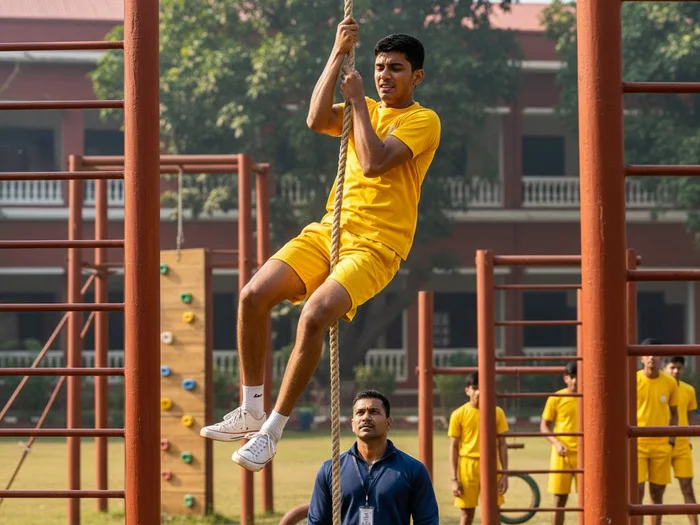
They need physical fitness. Running 1 km without stopping. Doing pull-ups. Basic exercises. Some kids are naturally athletic. Others need months of training just to meet minimum standards.
Medical tests eliminate candidates too. Vision problems, dental issues, flat feet – things you never thought about suddenly matter.
Good coaching addresses all of this. Not just math formulas and English grammar.
The Online vs Offline Debate
Everyone asks this. "Should I send my child to a physical center or is online enough?"
Honestly? It depends on your kid.
Self-disciplined students who focus well do fine online. They attend live sessions, watch recordings, complete assignments on time. Online coaching gives them flexibility to study at their own pace.
But if your child gets distracted easily? If they need someone watching them to stay focused? Online won't work. They'll skip classes, lie about completing homework, waste your money.
Offline coaching creates routine. Your child has to show up at fixed times. They're surrounded by other serious students. That environment pushes them to work harder.
Hybrid is best if you can afford it. Theory online, mock tests and PT offline. Gives you both flexibility and discipline.
How to Spot Coaching Centers That Are Lying
Some centers are genuinely good. Others are just businesses making money off desperate parents.
Red flags to watch for:
"100% selection guarantee!" – Run. Nobody can guarantee that. It's a competitive exam with limited seats.
No trial classes allowed – Why not? What are they hiding? Good centers let you attend demo sessions before enrolling.
Only showing photos of 5-6 successful students – Out of how many total students? Success rate matters more than absolute numbers.

Center just opened last year – Nothing wrong with new centers, but you're taking a risk. Established coaching has proven track records.
No parent-teacher meetings – How will you know your child's progress? Centers should communicate regularly with parents.
When Should You Actually Start?
Most parents start too late. Then they panic and rush through preparation. That never works.
For RIMC, start when your child is in Class 6. That gives two solid years. One year for learning, one year for intensive practice.
For RMS Class 6 entry, begin in Class 4. Early start means less pressure, better concept clarity.
For RMS Class 9, start in Class 7. Don't wait until Class 8 starts.
Can students crack it with shorter preparation? Sometimes. If they're exceptionally bright and disciplined. But why gamble?
The Money Question Nobody Asks
Coaching fees range from ₹20,000 to ₹2,00,000 per year. Huge difference.
Expensive doesn't always mean better. I know centers charging ₹1,50,000 with average results. And smaller coaching institutes at ₹30,000 with better success rates.
What matters: What are you getting for the money?
- How many classes per week?
- Quality of teachers?
- Study material included or extra?
- Mock tests frequency?
- Physical training sessions?
- One-on-one doubt clearing?
Calculate everything. Some "cheap" centers charge separately for everything. By the end, costs add up higher than "expensive" centers offering all-inclusive packages.
Real Talk About Success Rates
Every center claims 90% success rate. Don't believe those numbers blindly.
Ask: "How many students enrolled vs how many got selected?"
If 10 students enrolled and 9 got selected – that's genuinely good.
If 200 enrolled and 18 got selected – that's only 9% success rate. But they'll advertise "18 students selected!"
Numbers can be manipulated. Dig deeper.
What Happens After Selection
Getting admission is just the beginning. Military schools are tough.
The discipline, the routine, the physical training – it's a huge adjustment. Students who prepared properly adapt faster. They already know what to expect.
Students who barely scraped through? They struggle. Some even drop out in the first year because they can't handle it.
Good coaching prepares your child for the journey ahead. Not just the entrance exam.
Make Your Decision
Stop researching endlessly. Stop asking every parent you meet about coaching.
Visit 3-4 centers this week. Actually go there. See the place. Talk to teachers. Observe a class if possible. Get the feel of the environment.
Then decide based on what works for your child. Not which center has the fanciest brochure or the most expensive fees.
Your child's military school dream deserves the right foundation. Give them that. But also be realistic about their capabilities and commitment level.
Not every child is cut out for military school. And that's okay. Better to realize it early than force them into something they'll hate.