You know every year something strange happens in Sainik School interviews. Hardly anyone talks about it.
A boy walks into the interview room having cleared the written exam and medical test. He's one step away from getting in. The panel asks him a question:
"Tell me about yourself."
The boy goes blank. He says his name, his fathers name and his school name and then stops. He has nothing to say about himself.
This isn't one student; it's most of them. They spend months preparing for the exam solving math problems and memorizing facts about every state in India.. When asked about themselves they have no answer.
The seat is gone like that.
The Interview Is Not Just a Formality
Many parents think the interview is a small step after the written exam. They believe everything else is easy. This is wrong.
The Sainik School, RMS and RIMC ↗ viva panels have experienced people with defence backgrounds. They've talked to hundreds of children. Can tell in the first minute if a student is prepared or not.
The interview carries weight in the final selection. Two students with the exam score can have very different results based on their interview performance. The one who speaks clearly and shows interest will be chosen over the one who sits quietly and gives one-word answers.
The written exam tests what you know. The interview tests who you are. It checks your confidence, ability to talk, thinking and reason for wanting to join a school. These are different things.
What Questions Come Up in the Viva?
The questions aren't hard; that's the problem. They're so easy that nobody prepares for them.. When the moment comes students have nothing to say.
Here are the types of questions that come up every year:
About yourself: Tell me about yourself. What are your hobbies? What do you do after school? What are you good at? What is one thing you want to improve about yourself?
About your family: What does your father do? What does your mother do? Who do you look up to in your family. Why?
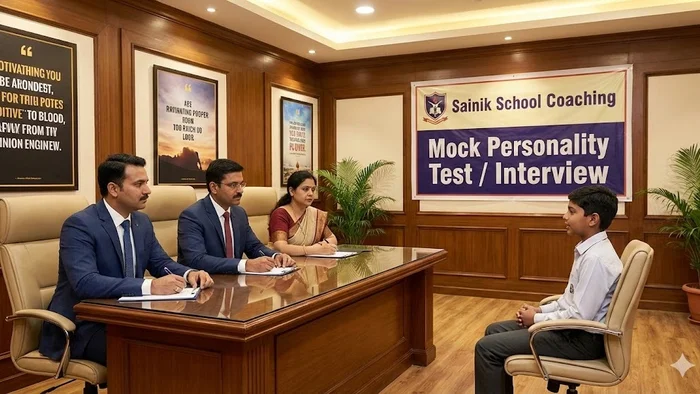
About your reason for joining: Why do you want to join a Sainik School? Why not stay in a school? Do you know what life is like in a school? Are you ready to stay from your family?
About awareness: Who is the Defence Minister of India? Who is the Chief of Army Staff? Name one thing the Indian army did that you know about.
Situation-based questions: What would you do if a classmate was being bullied? How do you handle it when you are angry? If you could change one thing about your school what would it be?
Read those questions. You don't need a textbook for any of them. You don't need coaching in Maths or Science. You just need to have thought about these things before walking into the room.
Most students haven't thought about them once.
Why Do Students Fail These Easy Questions?
There's a pattern. After watching many students go through this process the reasons become clear:
Nobody teaches them to think about themselves. In school children learn about rivers, dates and formulas.. Nobody ever asks them – what are you good at? What do you care about? What kind of person are you? These questions feel strange to kids because they've never been asked before. The interview room is the place to hear them for the first time.
They think talking about themselves is showing off. Many children come from homes where speaking about your strengths is seen as being proud. So when the panel asks what they're good at they go quiet.. In an interview if you can't tell the panel what makes you a good choice they have no reason to pick you.
They've never spoken in a setting before. Talking to friends is easy. Sitting in a room with three or four adults who are watching you and judging your answers is completely different. Without practice even a confident child can freeze.
They learn answers by heart. It backfires. Some students do prepare.. They prepare by memorizing a paragraph. They say it like a robot. The panel asks one follow-up question. The student has no answer because it wasn't part of the script. The panel can always tell when an answer is memorized. They want a conversation.
They have no reason for wanting to join. When the panel asks "why do you want to join " most students say things like "because my father wants me to" or "because its a school." These answers are weak. The panel has heard them a thousand times. They want to hear something. Something real. Something that shows the child actually thought about it.
The Difference Between a Weak Answer and a Strong One
Here's an example:
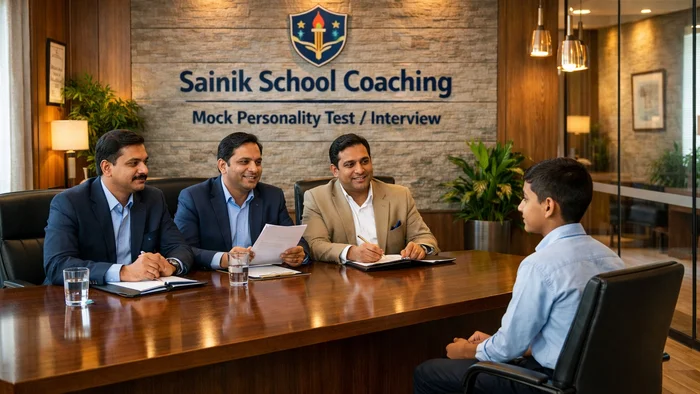
Question: Tell me about yourself.
Weak answer: "My name is Rahul. My father works in a bank. I study in class 6. I like playing cricket."
Strong answer: "My name is Rahul. I'm from Jaipur. I study in class 6. I like reading about history especially about battles and wars. I also play football. I'm the captain of my school team. Being captain has taught me how to work with a team and take responsibility. I want to join Sainik School because I want to grow up in an environment that builds discipline and courage."
Same boy. Same facts.. The second answer shows a person. It shows thinking. It shows purpose. That's what the panel wants to hear.
How to Build This Skill in Your Child at Home
Self-awareness doesn't develop in one day.. Children pick it up quickly when they're given the chance. Here's what you can start doing now:
Talk to your child every day about their day. Not just "what did you study". What was the best part of your day" or "did something happen that made you think." When children learn to reflect and talk about their experiences they're building the skill the interview tests.
Ask open-ended questions often. What would you do if you were the Prime Minister for one day? If you could learn anything in the world what would you pick? What is one thing you're proud of? These conversations get children with expressing themselves.
Let them make decisions. Let them order food at a restaurant. Let them pick where the family goes on a weekend. Let them solve problems around the house. Decision-making builds confidence. It teaches children to think and explain their choices.
Watch news together for 15 minutes a day. Read a headline together. Watch a news clip. Ask them what they understood. This builds awareness, which the panel tests.. It gives them real things to talk about beyond school and home.
Don't shut them down when they share an opinion. If your child says something you disagree with don't immediately say they're wrong. Ask them why they think that. Let them explain. Then share your view. Children who are always told to be quiet will have nothing to say in the interview because they were never allowed to practise saying anything.
What the Panel Remembers After Your Child Leaves the Room
The panel sees dozens of students in one day. Most of them blend together.. Some children stand out. Here's what makes the difference:
Eye contact. A child who looks at the panel while speaking comes across as confident. Most students look at the floor. Just making eye contact puts your child ahead of others.
A personal reason for wanting to join. Not a textbook line. Something real. Maybe someone in the family was in the army. Maybe they read a book that inspired them. Maybe they love the idea of living a disciplined life. Whatever it is it needs to come from the child not from an answer.
Saying "I don't know" without panicking. The panel will ask something the child doesn't know. They do this on purpose. A child who says "I am not sure sir but I would like to find out" makes a better impression than one who guesses or goes silent.
Interest. The panel can feel it when a child genuinely wants to be. It shows in how they sit how they speak and how they listen. You can't fake this.. You can build it by helping your child understand what a defence school really offers and why its worth wanting.
Basic manners. Saying morning when entering. Saying thank you when leaving. Sitting up straight. Not fidgeting. Addressing the panel with respect. These things sound small. Leave a strong impression.
Why Our Coaching Programme Takes the Interview Seriously
Lets talk about what coaching centres get wrong.
Every Sainik School, RMS and RIMC coaching centre in the country focuses only on the written exam. They teach Maths, English and GK. They give you tests.. On the last day they say "good luck, for the interview." No preparation. No practice. Nothing.
That's not how we work.
We see many good students miss their chance at the interview stage. They scored well passed the test and deserved to get in.. They couldn't talk about themselves in a way that impressed the panel.
Our Sainik School, RMS & RIMC Coaching Programme includes an interview and personality development module. It's not a thing. It's part of the programme from the start.
Weekly Speaking and Personality Sessions: Every week students practice talking about themselves answering questions and sharing their views on everyday topics. The goal is to make them comfortable speaking not to give them scripts to memorize.
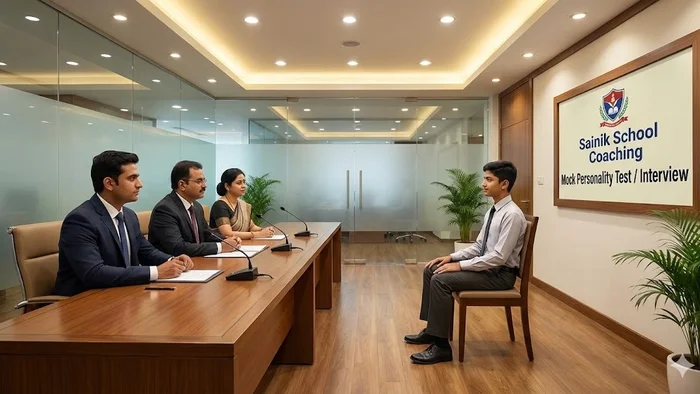
Mock Interviews: We do mock interviews that feel real. Students sit in front of a panel answer questions and get feedback. At first it's a bit shaky. By the sixth time they walk in with confidence. That practice makes the difference on the day.
Our mentors know what the panel wants. They understand the defence school selection process, the questions and the follow-ups. They know what body language the panel looks for. They train students to be natural and honest not rehearsed.
We do self-awareness activities. Students describe their strengths talk about their role models discuss events and explain why they want to join a military school. Over time they develop a picture of who they are. When the panel asks them a question they answer from real understanding, not from memory.
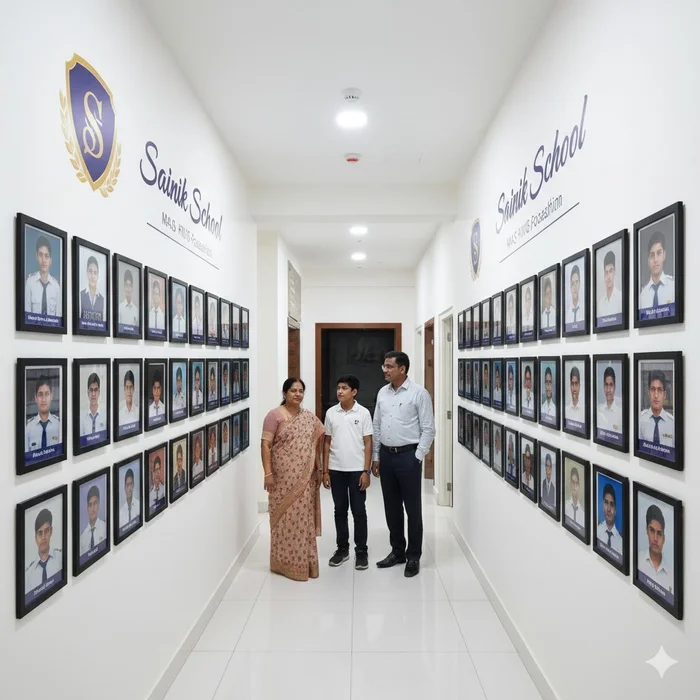
We also prepare students completely for the written exam. We cover the AISSEE ↗, RMS and RIMC syllabus, mock tests, previous year papers and individual doubt sessions.
Medical Fitness Screening: From Day One we check every student for issues like flat feet, eyesight problems, BMI and dental issues. If something can be fixed we start early so there are no surprises at the medical.
For students from cities we have a hostel with a structured daily routine. Living with aspirants in a disciplined environment builds independence and maturity.
The interview should be the stage. There's no syllabus, no formulas and no tough problems to solve. All your child needs is to talk about themselves and show they genuinely want to be, in a defence school.
Without preparation this easy stage becomes where dreams end. Not because the child wasn't good enough but because nobody helped them show that they were good enough.
Start working on this. Talk to your child ask them questions let them practice speaking and build their confidence one conversation at a time.. If you want coaching that prepares your child for the complete selection. Exam, medical and interview. We're ready to help.
Our students don't walk into the viva hoping for the best. They walk in knowing what to say and how to say it. Because they've done it times before.
Get in touch for a free counselling session. Give your child the preparation they deserve.