Letting your child go at age 10 is not easy. No parent finds it easy. You have spent ten years watching every step, every meal, every milestone. And now someone is suggesting you send that child away — to live in a hostel, sleep in a shared room, and grow up without you in the next room.
It feels wrong at first. It feels too soon.
But thousands of Indian parents make this decision every year. And most of them — almost all of them — say the same thing when they look back: it was the best decision we ever made for our child.
This guide is for every parent who is thinking about it but is not sure yet.
Why Age 10 Is Actually the Right Time
Child psychology tells us something important. The years between 10 and 14 are called the formation years. This is when a child's habits form. Their attitude forms. The way they handle difficulty, pressure, failure, and success — all of it takes shape in these years.
If those years are spent in a structured, disciplined environment — the child comes out stronger. If those years are spent without structure — old habits become very hard to break later.
Age 10 is not too early. In many ways it is the perfect time.
What Boarding School Actually Does to a Child
Parents who have never been to a boarding school imagine it as a cold, strict place. The reality is very different — especially in schools like Sainik Schools and Rashtriya Military Schools (RMS).
Here is what actually happens to a child in those first two years:
They learn to manage themselves. Nobody is waking them up five times. Nobody is packing their bag. Nobody is reminding them about homework. They figure it out — and that self-reliance stays with them for life.
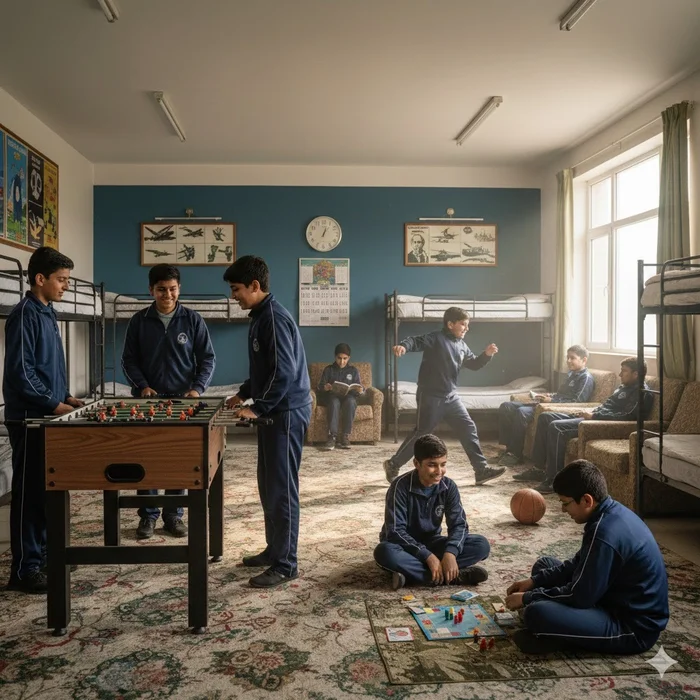
They learn to live with others. Shared rooms. Shared bathrooms. Shared meals. A child learns patience, respect, and teamwork not from a textbook but from daily life with fifty other children.
They stop being afraid of hard things. Early morning PT. Cold water. Strict schedules. A child who has done all of this by age 12 carries a quiet confidence that other children simply do not have.
How Sainik School and RMS Shape Personality in the Formation Years
This is where the difference really shows.
Sainik Schools and Rashtriya Military Schools (RMS) are not ordinary boarding schools. They were built specifically to develop young boys into confident, disciplined, and capable individuals. Every single part of daily life in these schools is designed to build character.
Discipline Becomes a Habit — Not a Rule
In a regular school discipline is enforced. In Sainik School and RMS it becomes part of how the child lives. Wake up time. Study time. Sports time. Everything runs on a schedule. Within six months most children stop needing to be told — they just do it. That internal discipline follows them into adult life, into careers, into relationships.
Leadership Is Taught Every Day
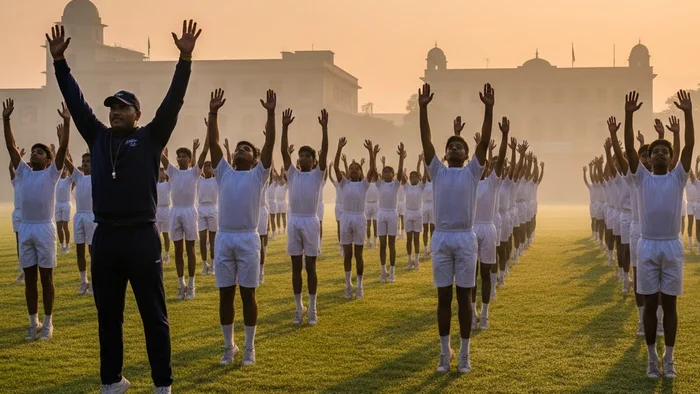
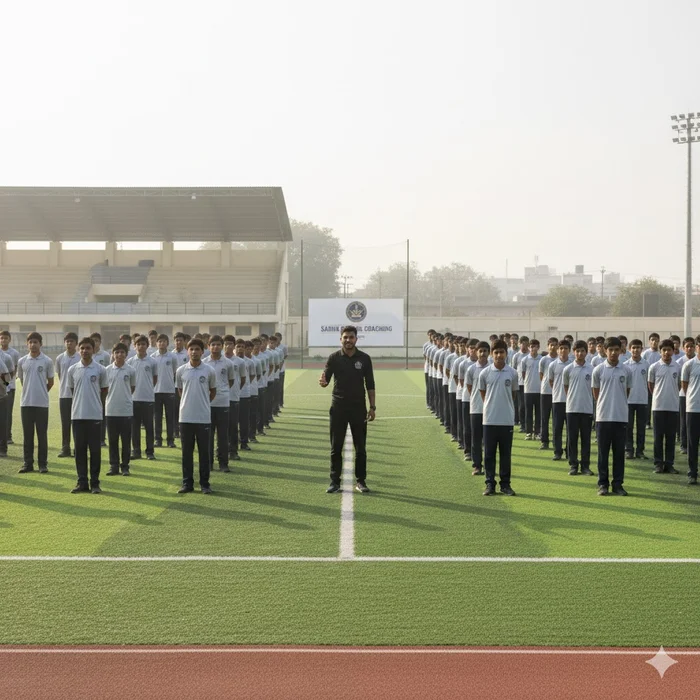
House captain. PT leader. Prefect system. These schools give children real responsibilities very early. A 12-year-old who has led a morning drill parade walks differently. Speaks differently. That is not an accident — it is by design.
Physical Fitness Becomes a Lifestyle
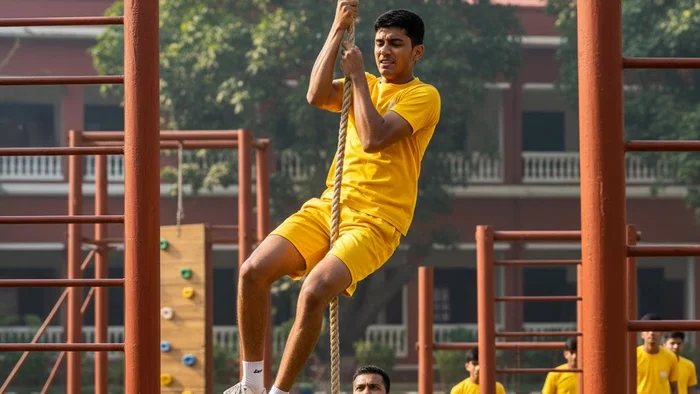
Daily PT. Weekly sports. Swimming. Running. These are not optional activities — they are part of the timetable. A child who spends five years in this environment develops a relationship with fitness that most adults struggle their whole lives to build.
Emotional Strength Grows Quietly
Homesickness hits every child in the first month. Missing parents. Missing home food. Missing comfort. But getting through that — with the support of friends and house masters — builds emotional strength that cannot be taught in a classroom. Children learn that they can handle difficulty. That feeling changes everything.
Communication and Confidence Improve Fast
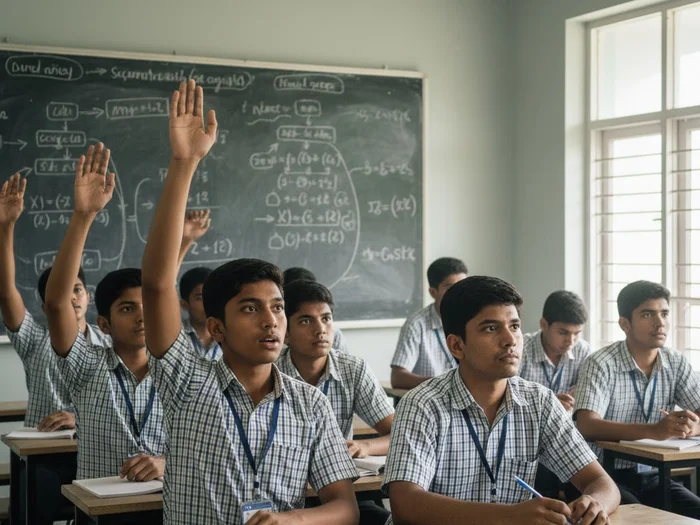
Daily assembly speeches. Debates. Elocution contests. Interaction with seniors. Children in these schools speak clearly and confidently in a way that surprises most outside visitors. By Class 9 most students can walk into any room and hold a conversation without nervousness.
Common Questions Parents Ask
Will my child feel lonely? Yes — in the first few weeks. Every child does. But the house system in Sainik Schools and RMS ensures that no child stays alone for long. House masters, senior students, and a tight peer group replace the feeling of isolation quickly.
What if my child falls sick? Every Sainik School and RMS has a full medical facility on campus. The child is looked after properly. Parents are informed immediately for anything serious.
Can I visit my child? Yes. Most schools have fixed visiting Sundays and holiday breaks. Some also allow parents to call on fixed days during the week.
Is it too strict? Structure — yes. But good structure. The children themselves stop seeing it as strict very quickly. Most of them come home during holidays and tell their parents they actually miss the school.
The One Thing Every Parent Gets Wrong
Most parents wait too long.
They think — let the child settle a little more. Let them grow up a little more. Let us wait one more year.
And then one more year becomes five years — and the formation years are gone.
The parents who enrolled their child in Class 6 at age 10 or 11 are the ones who see the biggest transformation. Two years of Sainik School or RMS at this age does more for a child's personality than ten years of regular school ever could.
Is Your Child Ready?
Your child is ready if they are —
- Curious and not afraid of new things
- Physically active and comfortable with outdoor life
- Willing to follow rules even when it is uncomfortable
- Ready to make new friends
Your child does not need to be perfect. These schools are built to shape children — not receive already-shaped ones.
Final Thought for Every Parent Reading This
You are not sending your child away. You are sending them toward something. Toward discipline. Toward confidence. Toward friendships that last a lifetime. Toward a version of themselves that you will be proud of every single day.
The hardest part is the first goodbye. Everything after that — for your child — is growth.