The written exam gets all the attention. Parents track mock test scores, chapter completion, and OMR accuracy. But the physical fitness test sits quietly in the background — and it catches families off guard more often than any other stage of the selection process. A child can score brilliantly in the written round, sail through the interview, and then stumble at the fitness test simply because nobody prepared them for it. Physical fitness for Sainik School is not about being an athlete. It is about meeting a defined standard — and that standard can absolutely be reached with the right practice, started early enough.
What the Physical Fitness Test Actually Involves
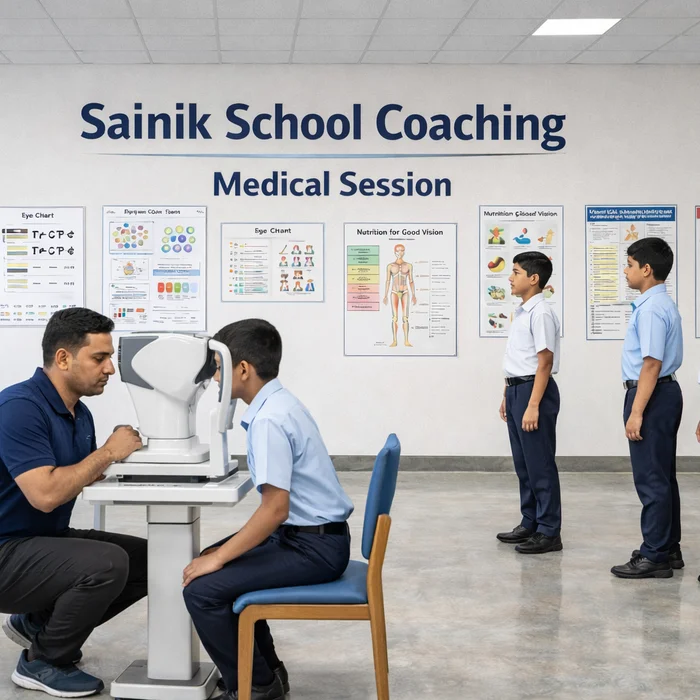
The physical fitness assessment at Sainik Schools is conducted after the written exam and medical round. It is not a random activity session. It is a structured evaluation that checks endurance, strength, coordination, and speed. The exact events can vary slightly between schools, but the core components that appear consistently across most Sainik Schools include a running test, push-ups, sit-ups, and sometimes a chin-up or pull-up round. Some schools also include a 600 metre or 1600 metre run depending on the age group. The child is assessed against an age-appropriate standard, not against other candidates.
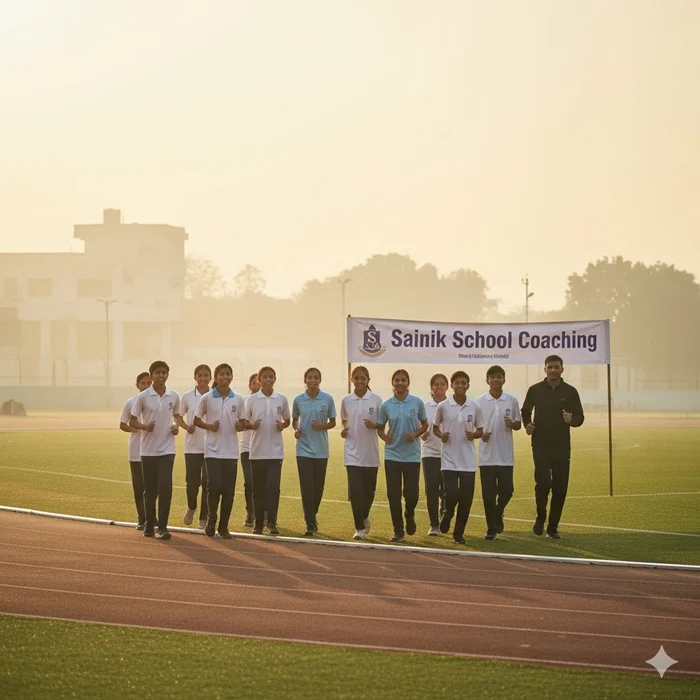
Running — The Foundation of Everything
If your child can run well, everything else becomes easier. Most Sainik Schools require candidates to complete a run — typically between 600 metres and 1600 metres — within a set time. For Class 6 candidates who are around ten to eleven years old, a comfortable pace over 600 metres is the starting point. For Class 9 candidates, the distance is longer and the expected timing is tighter.
The way to build running ability is not to push hard once a week. It is to run at a comfortable pace every single day and slowly increase the distance over weeks. Start with 400 metres. Add 100 metres every ten days. Focus on breathing rhythm and steady pace rather than speed. Speed comes automatically once the lungs and legs are trained to work together. A child who runs daily for three months will cover ground in the fitness test that a child who ran only on weekends simply cannot match.
Push-Ups — Upper Body Strength That Recruiters Notice
Push-ups are a standard part of almost every defence fitness assessment in India, including Sainik School evaluations. The key thing parents need to understand is that push-up form matters as much as the count. A child doing fifteen push-ups with proper form — full extension, chest close to the ground, straight back — will always be assessed more favourably than a child doing twenty-five with half movement and a bent spine.
Start with knee push-ups if your child cannot manage full push-ups yet. Build to five full push-ups. Then ten. Then fifteen. Three sets of push-ups every morning, five days a week, will produce visible and measurable improvement within six weeks. Do not rush the count. Build the form first and the numbers will follow on their own.
Sit-Ups — Core Strength That Carries the Whole Body
Sit-ups test core strength and they also test something less obvious — mental endurance. When the abdominal muscles are burning and the count is still going, a child either pushes through or stops. Sainik Schools are looking for children who push through. That quality is trained, not inherited.
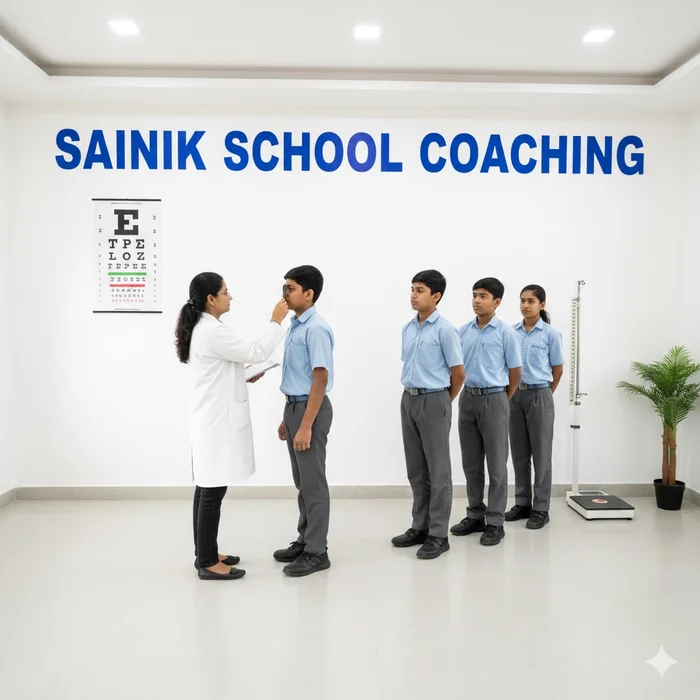
Begin with ten sit-ups per set, two sets per day. After two weeks move to fifteen per set. After four weeks move to twenty. Keep the feet flat on the ground and the hands behind the head without pulling the neck forward. Consistent daily practice matters far more than occasional intense sessions. The goal is not just to hit a number on test day. The goal is to make that number feel easy on test day.
Chin-Ups and Pull-Ups — The Exercise Most Children Skip
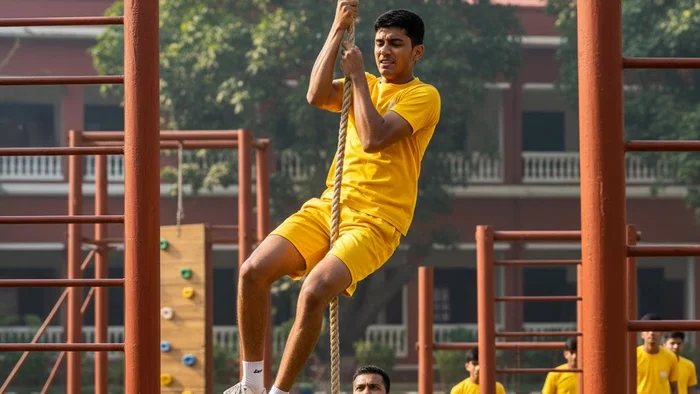
This is the exercise that most families ignore during preparation and most children struggle with on assessment day. A chin-up requires a child to hang from a bar and pull their body weight upward until the chin clears the bar. For many ten to fourteen year olds who have never trained this movement, it feels nearly impossible the first time they try it.
The solution is to start with a dead hang. Simply hang from a bar for as long as possible. This builds grip strength and shoulder stability. After two weeks of daily dead hangs, begin assisted chin-ups — use a chair or have someone support the feet slightly to reduce the load. Within four to six weeks of consistent practice, most children can manage two to three unassisted chin-ups. From there, the progress is faster because the foundational strength is already in place.
Flexibility and Coordination — Often Overlooked, Always Assessed
Flexibility is rarely listed as a separate test item but it is always visible to an assessor. A child who moves fluidly, bends easily, and changes direction without stiffness looks physically capable even before a single push-up is counted. Simple stretching routines — forward bends, side stretches, hip rotations, and shoulder rolls — done every morning for ten minutes will improve flexibility noticeably within a month.
Coordination is tested through activities like jumping jacks, spot running, and basic relay-style movements in some schools. These are not difficult if the child has been physically active. If your child has spent the last year entirely at a desk, reintroducing basic physical play and movement activities is the first step before any structured exercise begins.
Building a Simple Daily Routine That Works
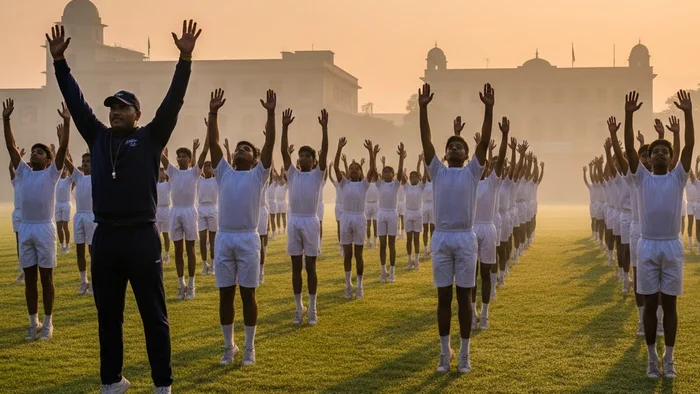
The best fitness routine for a Sainik School aspirant is one that is short enough to do every day without skipping. A forty-five minute morning session that includes a warm-up, running, push-ups, sit-ups, and a stretch is enough. Consistency over three to four months will take an average child to a fitness level that clears the Sainik School standard comfortably. The children who struggle at the fitness test are almost always the ones who started preparing two weeks before. The children who clear it easily are the ones who made physical activity a daily habit months in advance.