Getting into a Sainik School is a big deal. But many parents and students have one big question after that — what is life actually like inside? What happens every day? What are the rules? Is it hard to adjust?
This article answers all of that in simple words.
How the Day Starts
Students wake up early — usually at 5:00 AM or 5:30 AM. A bell rings across the hostel. Every cadet gets up, makes their bed, and gets ready.

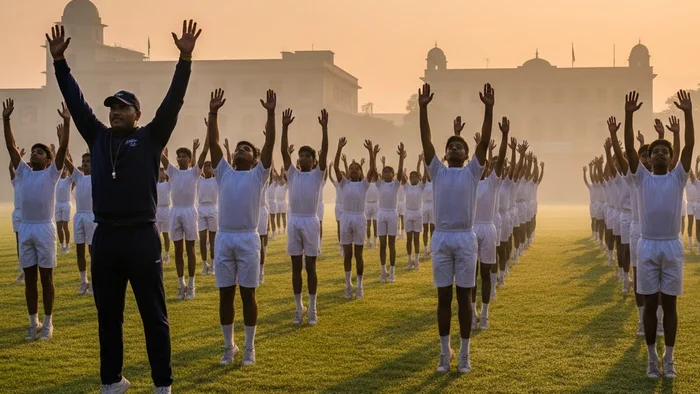
After that, students go to the ground for PT — Physical Training. This includes jogging, stretching, drills, and other exercises to keep the body fit and strong.
Morning inspection also happens at this time. Students are checked for clean uniforms, polished shoes, and tidy beds. This teaches them to take care of themselves every single day.
After PT and a bath, students go to morning assembly. The school anthem is sung, announcements are made, and then everyone heads to breakfast.
Full Daily Routine — Time Table
Here is the general daily schedule followed across Sainik Schools. Small differences may exist between schools based on location.
|
Time |
Activity |
|
5:00 – 5:30 AM |
Wake up, bed-making, freshen up |
|
5:30 – 7:00 AM |
Physical Training (PT) on the ground |
|
7:00 – 7:30 AM |
Bath, uniform, morning inspection |
|
7:30 AM |
Morning assembly, prayer, announcements |
|
8:00 – 1:30 PM |
Academic classes (CBSE ↗ subjects) |
|
1:30 – 2:00 PM |
Lunch in the mess hall |
|
2:00 – 2:30 PM |
Rest / quiet time |
|
2:30 – 3:30 PM |
Academic plus activities, skill training |
|
3:45 – 5:15 PM |
Sports, games, NCC / drill training |
|
5:15 – 6:00 PM |
Change, evening snacks |
|
6:00 – 8:00 PM |
Evening study / self-study session |
|
8:00 – 8:30 PM |
Dinner in the mess |
|
8:30 – 9:30 PM |
Prep time, reflection, get ready for next day |
|
9:30 PM |
Lights out |
Note: This schedule follows the standard daily routine prescribed by the Sainik Schools Society, Ministry of Defence. Flexibility is allowed based on the school’s location and setup.
Hostel Life — What It Looks Like

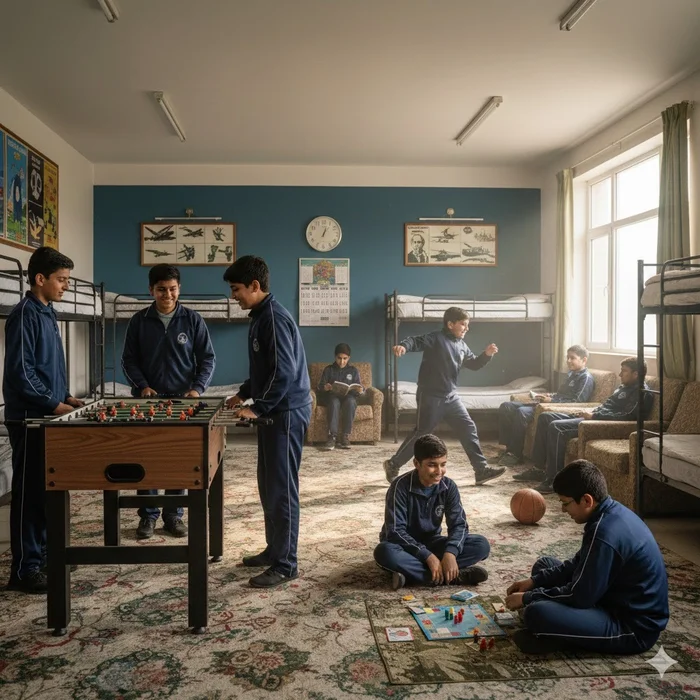
Students live in dormitory-style rooms called barracks or houses. Each student is assigned to a House — and houses compete with each other in sports, academics, drill, and other activities. This builds team spirit and healthy competition.
Living together teaches students how to work as a team. They share space, share responsibility, and look out for each other. Many students make their best friends here — friendships that last a lifetime.
Senior cadets also play a role in guiding younger students. This is how leadership is built from an early age.
Food in the Mess
Meals are served at fixed times every day — breakfast, lunch, evening snacks, and dinner. The food is planned to match the energy needs of active cadets who do PT and sports every day.
A typical day includes chapati, dal, sabzi, rice, and seasonal vegetables. Milk and eggs are a regular part of the diet. The focus is on nutrition, not just taste.
Eating in the mess also teaches discipline. Students learn to serve food properly, eat without wasting, and clean up after themselves. Mess etiquette is taken seriously.
Rules Every Cadet Must Follow
Discipline is at the heart of Sainik School life. Here are the key rules every student lives by:
• Wake up on time — no exceptions
• Bed must be made before leaving the dorm
• Uniform must be neat and clean every day
• Shoes must be polished, boots properly laced
• No mobile phones allowed inside the school campus
• Respect for seniors, teachers, and all staff is compulsory
• No student can leave the campus without permission
• Study hours are only for studying — no talking or noise allowed
• NCC parade and drill attendance is compulsory for all
Breaking these rules has consequences. Students may lose privileges, get extra duties, or face action from the house master. The system is firm but fair.
Weekends — Not All Work
Weekends are a bit more relaxed but still structured. Saturday mornings usually have full-dress parade, rifle drill, or band practice on the parade ground.
Sunday gives students time for personal tasks — laundry, letter writing, and free time. Schools also arrange guest talks from army officers and old students on weekends. These sessions inspire and motivate cadets about what lies ahead.
The First Few Weeks Are the Hardest
Many students find the first month tough. Waking up at 5 AM, missing home, strict rules, living away from family — it is a big change all at once.
But most students adjust within a few weeks. The routine becomes normal. Friends become family. And the confidence that builds during this time stays with them for life.
Students who go through this come out more independent, more focused, and more ready to handle pressure — whether they join the armed forces or choose another path.
What Parents Should Know Before Sending Their Child
• Your child will not have a phone — plan weekly calls through the school landline or designated call time
• Pack enough clothes and supplies as per the school’s joining kit list
• Teach your child basic tasks before joining — washing clothes, folding, waking up early on their own
• Homesickness is completely normal and it passes within weeks
• Safety inside the hostel is maintained through round-the-clock supervision by housemaster and school staff
• Visit days and exeat weekends are fixed — check the school calendar in advance
Final Word
Sainik School hostel life is tough in the beginning. But it is one of the best experiences a child can have. The early mornings, the PT, the discipline, the friendships, the NCC training — all of it shapes a strong, confident, and capable person.
If your child gets selected, trust the process. It works.