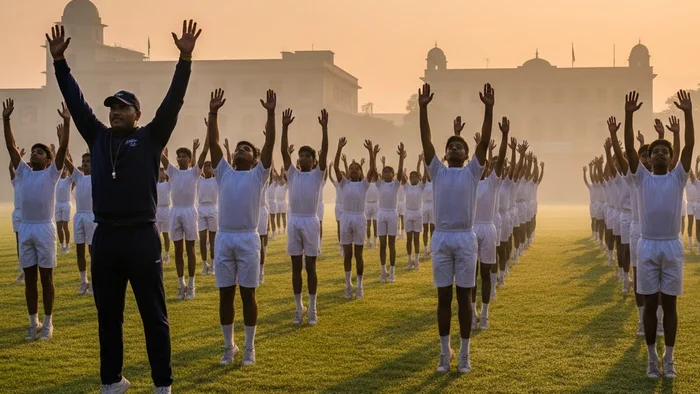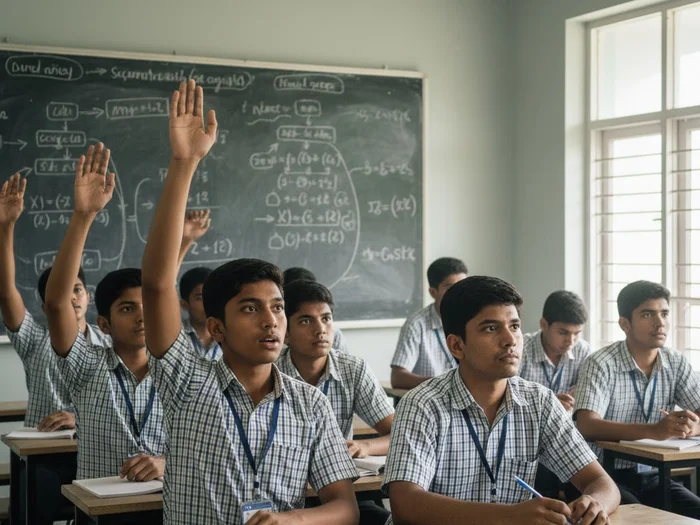

Every year thousands of families across India look at Rashtriya Indian Military College and think — this is the right place for my child. And they are right to think that. RIMC ↗ in Dehradun is one of the most prestigious schools in the country. It has been producing leaders, officers, and exceptional human beings since 1922. But getting in requires clearing a selection process that tests a child at every level — academic, mental, and physical. Understanding exactly how that process works is the first step toward preparing for it the right way.
Step One — The Written Examination
The RIMC entrance exam is conducted twice every year. The first sitting is in December for admission in January and the second is in June for admission in July. Boys between the ages of eleven and a half and thirteen years who are studying in Class VII are eligible to apply.
The written exam covers four subjects — Mathematics, English, General Knowledge, and a language paper. Mathematics and English carry the most weight in the paper. The Mathematics section tests topics from the Class VI and VII syllabus and requires both accuracy and speed. The English section tests grammar, comprehension, and the ability to express clearly in writing. General Knowledge covers current affairs, science, and general awareness. The total marks for the written exam are 300 and the paper is conducted at designated centres across India.
One thing that separates RIMC from other military school exams is the standard of English it demands. The comprehension and essay sections require genuine language ability. Students who have only prepared for Hindi medium exams often find this section particularly challenging. Starting English preparation early and reading regularly makes a significant difference here.
Step Two — The Interview
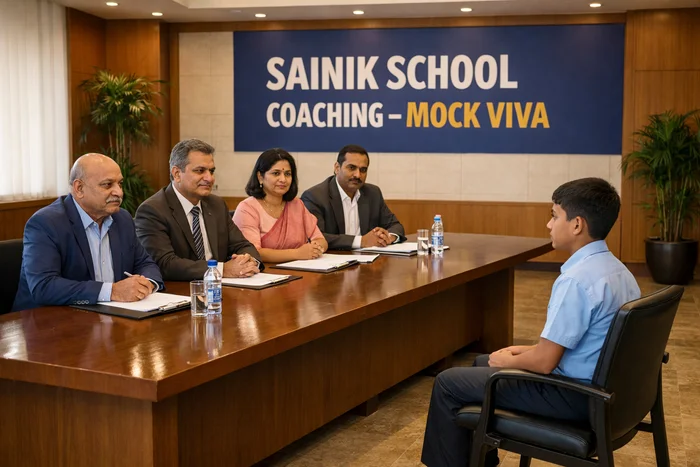
Students who clear the written exam are called for an interview conducted at RIMC Dehradun. This is not a casual conversation. It is a structured assessment conducted by a panel that includes serving military officers and senior school staff.
The interview tests several things at once. It checks whether the child can think on their feet. It checks their general awareness and curiosity about the world around them. It checks how they carry themselves — posture, eye contact, manner of speaking. And it checks something that is harder to define but easy to notice — whether this child has the temperament to thrive in a military environment.
Common areas covered in the RIMC interview include current affairs, questions about the child's interests and hobbies, basic reasoning questions, and questions about why they want to join RIMC specifically. Children who have read widely, follow the news, and can speak about themselves and their interests with genuine enthusiasm tend to do well. Children who have only prepared stock answers without real understanding tend to get found out quickly by an experienced panel.
The interview carries real weight in the final selection. Many students who performed well in the written exam have missed selection because the interview was not prepared for seriously. This is the stage most coaching centres ignore and it is the stage that deserves as much attention as the written paper.
Step Three — The Medical Examination
Students who clear both the written exam and the interview go through a medical examination. This is conducted according to standards set by the Indian Army and covers vision, hearing, physical fitness, and overall health. The medical standards are strict and non-negotiable.
Common reasons for medical rejection include poor eyesight beyond the permitted limit, flat feet, underweight or overweight beyond the accepted range, and any chronic health conditions. Parents should get their child's health checked by a doctor well before the medical examination so that any correctable issues can be addressed in advance. For example, if a child is slightly underweight, a few months of proper nutrition and physical activity can bring them within the acceptable range.
Final Merit and Selection
The final merit list is prepared based on the combined performance across the written exam, the interview, and the medical clearance. A child must clear all three stages to be considered for selection. Clearing two out of three is not enough.
Seats at RIMC are limited. Each batch has a small intake and competition is national. But the selection is fair and transparent. A child from any background, any state, and any type of school can get through if the preparation is thorough and covers all three stages seriously.
The process is demanding by design. RIMC is looking for children who have what it takes — and the selection process is built to find exactly those children.